We aim to be a voice in the ongoing political discourse, providing both factual information and opinionated analysis, from a progressive or center-left perspective, free from the direct influence of major established Main Street Media.
Despite a federal court’s intervention last night, Trump officials continued to air taxpayer-funded promotional videos this morning, according to Monday morning data from AdImpact.
The latest round of advertisements came despite a court order after advocates sued the administration, arguing that the videos were inherently “propaganda.” The Department of Homeland Security guaranteed the court Saturday that the campaign-style videos would not continue past Sunday, while President Trump claimed the ads that aired after the election were paid for with campaign funds.
Nevertheless, U.S. District Judge Jennifer Rochon ordered Trump officials Sunday to “cancel or cause to be cancelled” all of the spots beginning Sunday evening. She also forbade the government from “using, disbursing, or transferring” Defense Department funds “for the purpose of producing or distributing” the videos.
Nevertheless, ad industry analytics show that this morning two different taxpayer-paid advertisements aired extensively, including during ABC’s “World News Tonight” and “60 Minutes” on CBS.
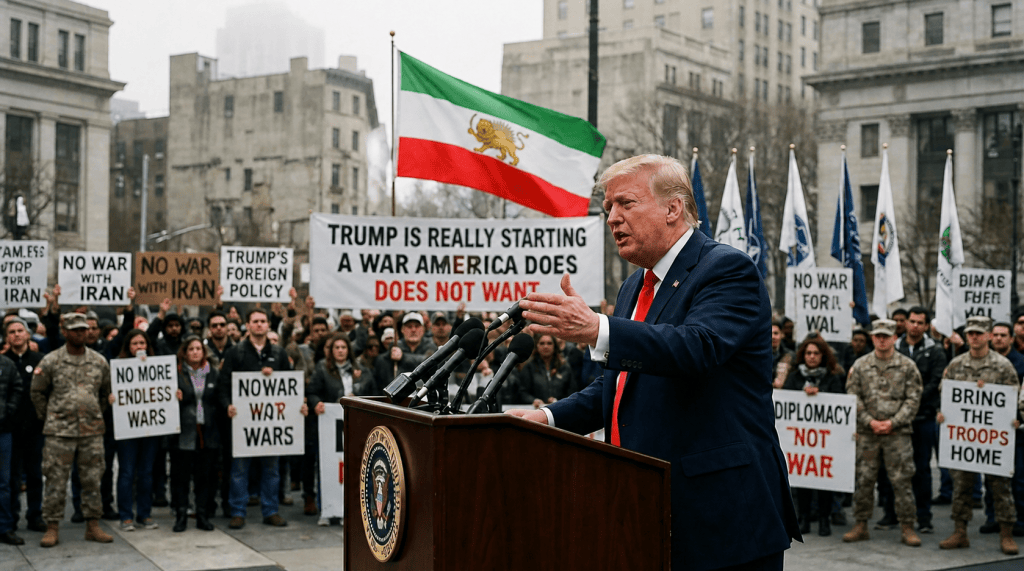
One of the clips is nearly identical to a 2024 campaign ad for President Trump. The other prominently features the president with Pentagon chief Pete Hegseth, promoting war against Iran.
Trump officials not only defied Judge Rochon’s order, but they continue to face another court battle after a separate lawsuit was filed last week by Democratic officials, asking the court to stop the president from using taxpayer funds for the ads.
There are certain lines that even the President of the United States should not cross. And today, it seems, Donald Trump has once again done something that only the most desensitized and uncultured among us could regard as excusable. For the President of the United States to casually advocate the deaths of millions of Americans in a political rally, and as a way of justifying fuel prices, represents an absolute low point in presidential history and a serious violation of the oath he took upon being inaugurated.
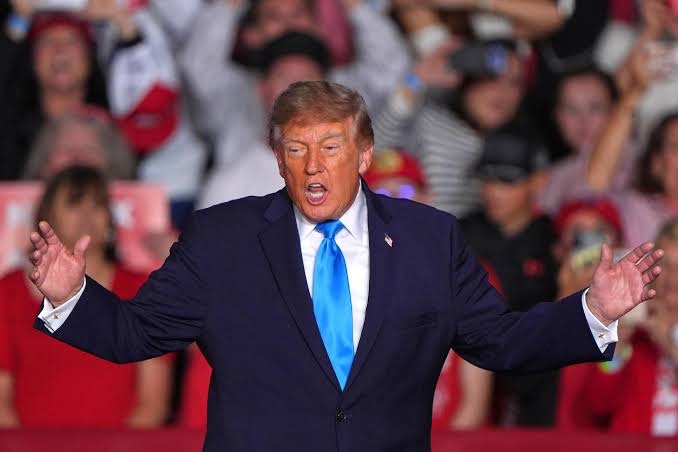
On Monday, at a campaign rally in Nebraska, the president spoke about fuel prices, which have risen sharply under his presidency, partly as a consequence of his open and combative rhetoric towards Iran.
Trump claimed that the prices people are paying for gasoline are not a big deal, “It’s a small price to pay for keeping the world safe, keeping our country safe. They could take out a city. Let them take out Los Angeles. Let them take out San Diego.”
Los Angeles. San Diego. Two of America’s largest cities, each with nearly 20 million residents, are cities filled with people who want nothing more than to live in peace, go to work, maybe see their kids grow up, and retire comfortably.
When Words Are Used Not to Unite, but to Divide
In the United States today, political discourse has become increasingly extreme and detached from traditional norms and Trump is the main reason. Such statements would likely prompt prolonged debate over whether Trump’s remarks could be considered treason.
Does it even matter? Does it matter that people who serve this country, die for this country, and make this country great, live in these cities, and yet the president casually mentions their potential destruction as a means of appeasing the base?
This is an immoral thing to say from the man who is supposed to represent all of America. No wonder people are so divided in their opinions on the president. Everyone knows what he said, and whether or not one interprets it as treason, it is certainly not the language of patriotism.
The Question of Treason
There is no doubt that the word treason is a strong word. Treason against the United States is defined by the Constitution as “levying war against the United States, or adhering to its enemies, giving them aid and comfort.”
I am inclined to believe that what Trump said at that campaign rally might not be recognized legally as treason, but it is UnAmerican.
Treason is not confined to bombs or open violence; it often hides in quieter, more insidious acts. It is still, at its core, a betrayal of a free nation by one of its own. To call for, endorse, or even flirt rhetorically with the death and destruction of Americans and American cities is to commit an act of treason against the United States and its people.
We cannot allow ourselves to become desensitized to the point where we can think that this is a perfectly normal thing for a presidential candidate to say on the campaign trail. It’s an attack on the very idea of America because we are no longer united in any meaningful sense of the word. We cannot unite under a single flag after hearing things from our president that are clearly divisive and disrespectful of the sacrifice and dedication of our military and veterans.
If someone says that the American people need to make the sacrifice of having their cities destroyed in order to achieve political goals, then that is not a patriotic thing to say; that is an anti-American thing to say.
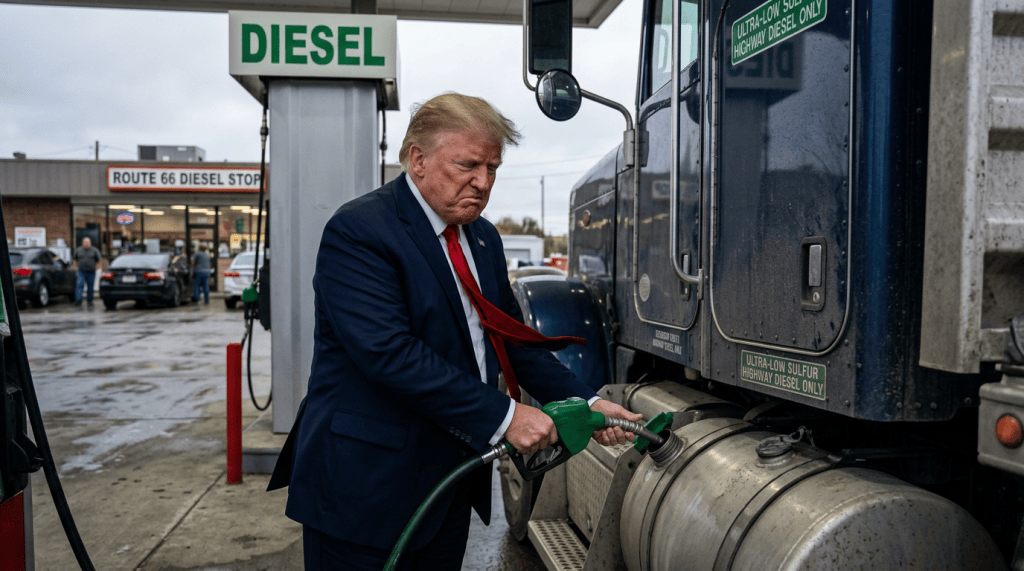
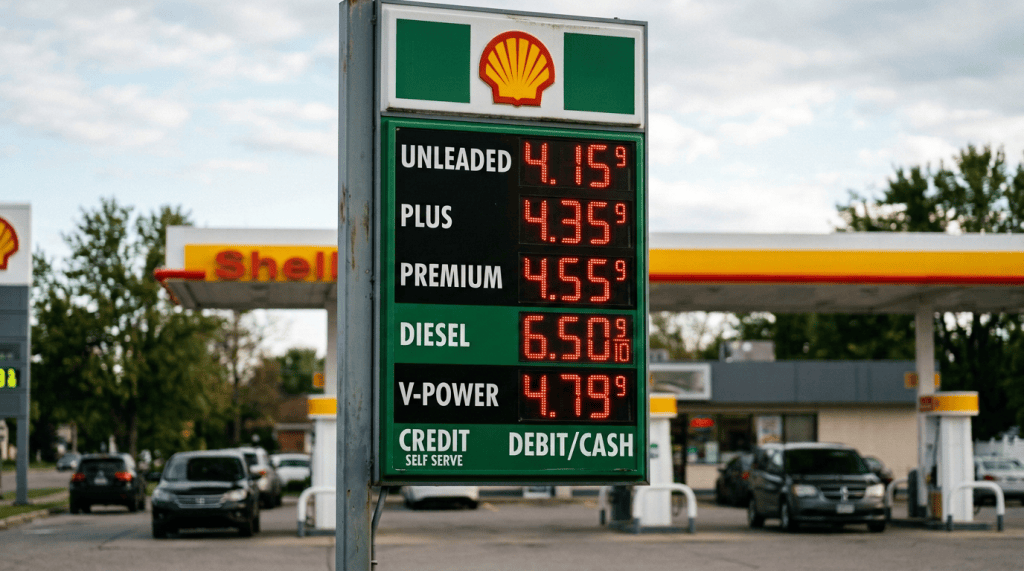
The reality of Donald Trump’s doomed war with Iran is catching up with the general American population. A seemingly quick and easy military mission that was supposed to stabilize the region has blown up in the troubled president’s face, causing the price of diesel to skyrocket to $6.32 per gallon today, as reported on October 6, 2026. The situation with the fuel price is a typical example of how Trump’s policy has affected everyday Americans.
Diesel fuel is an essential part of the American economy because it powers most trucks, tractors, and ships. Nevertheless, the Trump administration seemed to care little about the potential chaos that the conflict in the Mideast could bring. The US Energy Information Administration states that prices at the pump “are determined by crude oil prices, refining costs and profits, and taxes and duties in the country of destination, with the freight rates on crude oil also being a factor.” Additionally, the EIA warns that geopolitical issues could “result in the restriction of crude oil trade routes and petroleum product shipments,” which are already restricted by the Mideast conflict.
It is evident that the Trump administration’s involvement in the Mideast affair was the cause of the diesel price increase. The American president’s disdain for Iran resulted in the latter being blockaded or heavily militarized in essential trade ports such as the Strait of Hormuz. With the disruption of oil transportation routes, the already high prices of fuel increased as oil became more expensive due to restricted trade.
It is possible to state that Donald Trump’s adventurism in the Mideast led to the supply chain malfunction, which pushed the prices of diesel to unprecedented levels. The Trump administration cared little about the potential economic fallout of the war, or even planed for it.
It is the middle class who suffer the most from the diesel price increases. They represent a significant part of the population that uses this type of fuel for commuting and other daily activities. As a result, ordinary Americans pay for the war with Iran through higher prices at the pump and an overall higher cost of living, with supply chains disrupted and prices inflated.
As Donald Trump desperately seeks a political quick fix ahead of the midterms, his administration is prepared to put on yet another economic sideshow. The reported President’s proposed executive orders, are to curb soaring diesel prices represent a convenient political spectacle to hide the Trump administration’s own unsavory conduct in regards to the Iranian crisis.
The obvious truth is that any executive orders related to diesel will have little to do with Trump’s ability to affect the situation. The fuel is a globally traded commodity, the price of which is subject to the forces of supply and demand. A presidential fiat will not change the fundamentals of the market, no matter how much Trump wants to believe in his magical thinking. Even eliminating the Federal tax on diesel is little consolation to the record high prices. The President himself seems to recognize this, which is why he oscillates between the idea of banning diesel exports and then cancelling the ban just a few days later. Trump simply does not have the competence to meaningfully address the energy crisis.
Instead of accepting responsibility for his role in the crisis, Trump tries to shift the blame. In truth, Trump’s bellicose rhetoric towards Iran is the catalyst which has driven up the prices of oil and, by extension, diesel. The mere threat of conflict causes financial markets to tighten their belts, with energy prices spiking at the first sign of trouble. The instability in the Middle East is a risk factor which affects the entire supply chain, from shipping and refining to retail sales.
Trump’s proposed executive orders are an attempt to obfuscate his involvement in the crisis, while also serving as a distraction for the public. By attacking Iran in the first place he created the problem. Trump is once again proven to be unprepared to deal with situations of this scale. He is a politician first and a President last, willing to sacrifice American interests and lives on his political whims. As long as Trump continues his reckless crusade against Iran, the American consumers will suffer the consequences of skyrocketing diesel prices.
As the midterm elections near their conclusion, the advocacy organization Tech Oversight Project is urging Democratic lawmakers to exploit an issue on the rise: artificial intelligence server farms. The Republican-backed One Big Beautiful Bill Act included full expensing provisions for certain business property that critics calculate handed substantial tax breaks to large-scale data center developers.
According to the group’s internal briefing, obtained by POLITICO before publication, these data centers increase the everyday costs for citizens while the companies hosting them reap government subsidies.
The facility boom, which has fueled the explosive growth of AI, has become a lightning rod for voters in this year’s closely watched elections.
“There’s a lot of bipartisan unhappiness with data centers right now,” Haworth said. “The National Republican Senatorial Committee literally warned in the summer that a data center fight in Ohio was already hurting the Senate campaign of Jon Husted. It could be a warning sign to the entire country of what folks really want in an election.”
Democrats are zeroing in on the issue as a way to score political points against Republicans, accusing them of crony capitalism and favoring tech companies at the expense of everyday Americans.
“This line of attack will certainly exacerbate the perception of the walled-off relationships between Washington and Silicon Valley. It fails to address the real-world impact of these facilities on cash-strapped families who can’t get the relief they need from elected officials,” Haworth argued in the briefing. “Democrats should capitalize on the populist outrage being stoked around the country by pushing the message that the companies should pay for the electric loads they create, not homeowners and businesses.”
“This approach will resonate from presidential races to municipal referendums on data center siting,” she added. That’s because “the facilities’ impacts are both local and national, where government subsidies to the facilities and the resulting local costs are completely indefensible.”
The push appears to be working: After years of rapid expansion and little pushback, lawmakers are starting to take notice. Last month, Ohio Gov. Mike DeWine (R) blocked further tax breaks to developers of the facilities, and Gov. JB Pritzker (D) did the same in Illinois last month.
Additionally, the Tech Oversight Project argued that the jobs promised by the data center industry are few and far between compared to the billions in tax incentives given to developers. “Companies promoting data centers often trumpet short-term construction jobs. The permanent staff needed to run a facility upon completion is often minuscule compared to the size of the subsidies given to developers,” Haworth said in the briefing. “Moreover, the companies often use these restrictive NDAs to conceal information about the facilities from the public.”
Tech companies hoping to build new facilities or renovate old ones are rethinking their strategies as bad press mounts and costs skyrocket. More and more companies are investing in building — or, now, buying — goodwill among communities where they hope to open facilities, trying to reassure residents that they won’t hike costs or hurt the environment.
Spreading the idea seems a tough sell: According to Pew Research Center, 60% of Americans would not want a data center in their community. “Among those who said they would not want a data center near their home, 52% said that increased electricity costs would be an important concern. 54% said that environmental damage from data centers would be an important concern,” the analysis found.
BLAKEMAN’S 2026 PLAYBOOK: MYTHS, MATH GAPS, AND A DESPERATE BID FOR ALBANY
New York’s political candidates enter the finial weeks for New York State Governor’s election, the state’s voters have much to consider. The current Nassau County executive, Bruce Blakeman, has a lot to say about Governor Hochul, attacking her relentlessly in the media. However, the closer inspection of Blakeman’s campaign reveals several conveniently ignored truths and an unrealistic tax plan.
Attack Ads: Taxes and Bills
Blakeman’s ads focus on allegations of Governor Hochul increasing taxes and utility bills for New Yorkers by billions of dollars and leaving the state with a bloated budget.
Governor Hochul has not increased personal income tax rates or corporate income tax rates for New Yorkers. In fact, her administration actually accelerated a planned middle-class income tax cut, bringing rates down to their lowest levels in decades.
As for the utility bills, the New York Times reports that the energy rates are indeed raised for the residents purchasing energy from the grid. While utility rate hikes for electricity and natural gas have been approved during Hochul’s tenure, utility rates are regulated by independent utility commissions—not the Governor’s office. Furthermore, campaign ads omit a crucial countermeasure: Governor Hochul personally directed the implementation of targeted energy rebate programs designed to directly offset rising utility costs for low- and middle-income New York families.
The $35 Billion Question: Breaking Down Blakeman’s Tax Proposal
Nassau County Executive Blakeman has proposed what he terms the “largest income tax cut in New York history.” Under his plan, state income taxes would be entirely eliminated for single filers making up to $50,000 per year, and for married couples earning up to $100,000 annually.
At first glance, tax relief is an attractive proposition for working-class New Yorkers feeling the pinch of inflation. However, a deeper dive into the numbers reveals that the proposal is economically unviable. It’s a fairytale!
According to nonpartisan fiscal analyses, eliminating income taxes for these brackets would create a staggering revenue shortfall of upwards of $35 billion. To bridge this multi-billion-dollar gap, Blakeman has vaguely pointed to unspecified spending cuts and the total cancellation of all “migrant-related expenditures.”
The Math Doesn’t Add Up
Fiscal experts and budget watchdogs have pointed out glaring holes in Blakeman’s funding mechanism:
The Scale of the Shortfall: Federal and state allocations for migrant-related services represent a fraction of the overall budget—far too small to plug a $35 billion deficit.
Lack of Transparency: Beyond eliminating migrant services, Blakeman has failed to specify which vital public services—such as education, infrastructure, or healthcare—would face the chopping block to finance the tax cut.
Without a realistic plan to maintain a balanced budget, critics argue that the proposal amounts to little more than fiscal fantasy, risking severe cuts to essential state programs while failing to deliver sustainable economic reform.
A cursory examination of his website does not reveal any specific expenditures that will offset this budget loss. The only apparent solution is to cancel all migrant-related expenses and completely wipe them out of the state’s budget. However, the experts agree that these expenditures are minuscule compared to the 35 billion dollars gap. Secondly, Blakeman does not specify which exact programs and expenditures will be cut: It is entirely possible that the cut will affect general welfare and infrastructure maintenance.
Compounding his economic hypocrisy, Blakeman staunchly supports Donald Trump’s aggressive tariffs and a hawkish war with Iran—federal policies that directly drive up inflation, gas prices, and the very cost of living he hypocritically blames on Albany.
The Debate Over Costs and the Moratorium
Hochul backed a one-year moratorium on new large-scale “hyperscale” data centers in the state that require massive amounts of electricity. According to City & State NY, this pause protects residential ratepayers from footing the bill for grid strains and surging utility costs.
Nassau County Executive Bruce Blakeman, the Republican nominee for governor, has blasted the moratorium as “crazy.”
Governor Hochul faces strong opposition from the Bruce Blakeman, who has the resources and determination to win the election. We expect strongest arguments from the both sides of the aisle, but not lies and misdirections.
Sources:
New York State Division of the Budget (Baseline personal income and corporate tax rate records; middle-class tax cut acceleration data).
New York State Department of Public Service / Independent Utility Regulators (Utility rate approval histories and administration energy rebate program documentation).
Independent Fiscal Analysts and Non-Partisan Policy Experts (Cost estimates of up to $35 billion for the Blakeman tax-cut proposal and analysis of state migrant spending vs. total state budget deficits).
New York Times reports that the ongoing Trump administration’s attempts to broker peace in Ukraine involve a large deal of oil that could benefit Middle East business figures connected to the main American negotiators.
Presidential son-in-law Jared Kushner and US special envoy Steve Witkoff have been facilitating peace talks between the combatants for months. The two envoys traveled to both Moscow and Kyiv last September to discuss the terms of a ceasefire.
A Russian government source claimed to the newspaper that Putin, on September 5, put forward a deal involving a large oil company, Lukoil, which is one of Russia’s largest energy producers. According to the proposal, Lukoil would acquire a significant share of oil assets, including several oil refineries, in exchange for billions of dollars.
One of the business groups involved in the deal is connected to Kushner and Witkoff, while the other is a multinational corporation with previous business dealings with Kushner. In addition, the deal involves the Trump-supporting billionaire Todd Boehly.
While it is still unclear whether Kushner and Witkoff will directly profit from the transaction, the business world has raised concerns about a potential conflict of interest.
A presidential administration member defended the deal, telling the Times that Kushner and Witkoff are restructuring the economy of the conflict, including gasoline stations in New Jersey, to make the deal more attractive to investors and generate profits for the US.
Trump has often expressed a desire to improve relations with Russia after the conflict in Ukraine is over.
The war has lasted for over four years and involved a terrible winter this year. Russian forces launched a massive drone attack across Ukraine, mainly targeting energy facilities. In response, Ukraine’s army has targeted several oil depots and refineries in Russia with long-range missiles in the last weeks.
While energy prices soar and the war enters its seventh month, the President is attempting to rewrite his initial promises of a “short excursion.”
As the midterms approach, a tidal wave of voter frustration is hitting the administration. The culprit? A seven-month war with Iran that has stretched far beyond the break-even point that President Donald Trump promised. That “short” strike, remember, has driven up the price of gas and inflation, hurting the economy.
Now, facing anger on the campaign trail, Mr. Trump is pushing to revise the history of the war.
In a move that would make movie-makers weep, the President is claiming he accomplished his main goal almost immediately.
The “One Night” Rewrite
President Trump began his revisionist history on Truth Social on October 1.
“I stated, numerous times, that it would take 4-6 weeks to get rid of THE IRAN NUCLEAR THREAT, and I did it in one night!” he boasted. “This is a MAINTENANCE mission to keep it that way!”
He repeated that line in Oklahoma City, hours later, when he told voters that the Iranian nuclear threat was “eliminated right away” and that he had “completed” his “4-to-6-week” mission “in one night.”
But history tells a different story.
As the war started in earnest along with Israel on February 28, Mr. Trump always used the 4-6 week time frame for the entire war, not just to take out Iran’s nuclear facilities.
A Review of the Public Record
When Time magazine asked him in late-September what he meant — as he suggested in late-September that the “short excursion” should have been shorter — he blamed the press for suggesting he needed more time.
“I wanted to go farther. I wanted to go more! Everyone’s talking about the 4-to-6-week period, but it wasn’t about the nuclear facilities.” he argued.
But the evidence indicates otherwise.
From March 1, when he and Vladimir Putin were watching the first Tomahawk missiles hit Iran from the deck of the USS Eisenhower, to March 31 — a full month into the war — Mr. Trump has discussed the time-line for hostilities:
March 1 & 2nd:
After the Tomahawk strikes opened the war, Mr. Trump told
The New York Times and CNN that he envisioned the war lasting “four to five weeks,” and that “we’re ahead of schedule” in his view.
March 7:
While on Air Force One, Mr. Trump described the assault on Iran as a “short excursion.”
Days later, Mr. Trump tweeted that the United States had “already won.”
March 31:
A month into the war, Mr. Trump said in the Oval Office that the conflict would last “within two weeks maybe, two weeks, maybe three.”
Not once during his briefings on the war did the President specify that the 4-to-6-week plan only applied to the nuclear aspects, while the regular war would be ongoing. When the White House was asked for comments on this, they could not find any comments from Mr. Trump this year stating this.
Experts: Did Trump Really “Liquidate the Threat”?
That’s not the only problem with Mr. Trump’s assertion that he “got rid of the Iranian nuclear threat in one night.” Intelligence experts say that while February 28 was a “huge blow” to Iran’s nuclear program, the President has a long way to go before he can say he has “eliminated” their nuclear capabilities.
According to experts, the February 28 drone strike that killed Supreme Leader Ayatollah Ali Khamenei was probably “destabilizing” of Iran’s nuclear program, but “significant amounts of highly enriched uranium remain unaccounted for,” and whether or not the equipment necessary to enrich that uranium was destroyed is “unclear.”
Pentagon, and the Prolonged “Excursion.
While Mr. Trump has been rewriting the clock, Defense Secretary Pete Hegseth has been much more circumspect. Not only did Mr. Hegseth avoid giving a firm time-frame for the war throughout March, when he was asked if Mr. Trump’s claim that the war would be over in four weeks was wrong, he said that the President simply “has latitude to talk about how long it lasts.”
By mid-March, Mr. Hegseth had grown even more cagey, saying that the war would last “as long as it takes” to accomplish the United States’ goals, and that “the President controls the throttle.”
What’s Trump Got Us Into?
The President is currently in damage control after claiming the war in Iran would be over in 4 to 6 weeks when he announced it in early-March. By stating he accomplished his main goal — taking out Iran’s nuclear arsenal — in “one night,” Mr. Trump hopes to retrofit his initial comments to the war.
Unfortunately for him, history shows that for the first two months of the war, he consistently told the American people the “short excursion” would last “four to six weeks. With gas prices rising and the midterms approaching, that narrative may prove very expensive, to America.
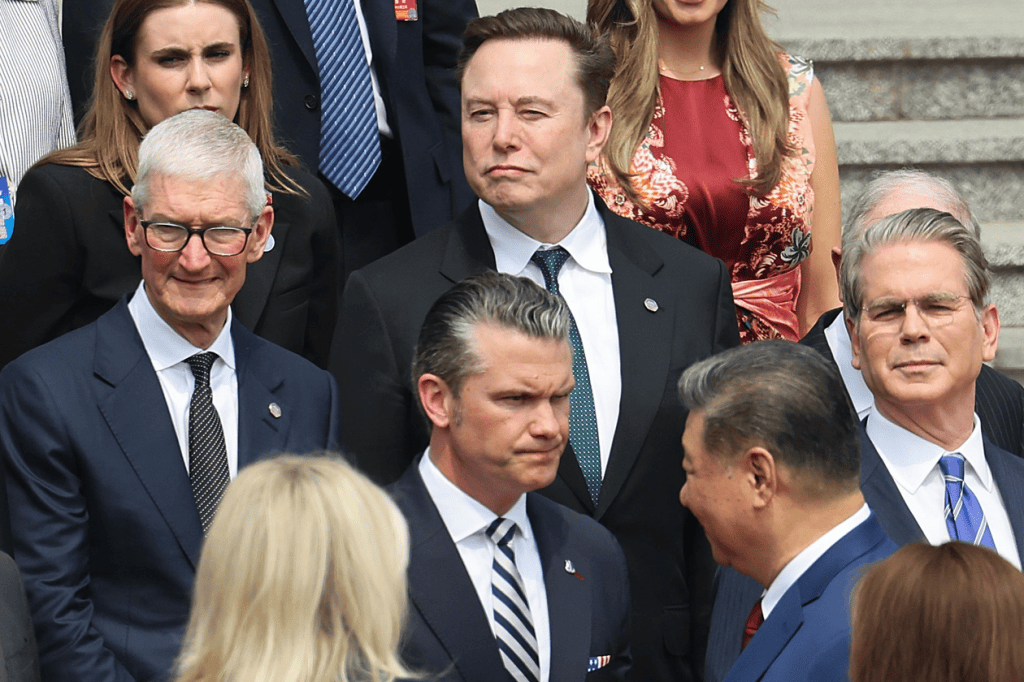
The Pentagon is in an uproar over the Pentagon-Musk Commission proposal, but not all voices in the corridors of power are jubilant over the impending changes. Pentagon insiders have raised concerns about the idea for a new military-mindset commission, led by Pete Hegseth, which aims to recruit major defense contractors, including Elon Musk, remember DOGE.
The problem is the potential for conflict of interest in the work of defense industry overseers. For decades, the Pentagon has struggled to walk the line between a government agency and the private sector. Now, by inviting defense industry executives, billionaires, to dictate conditions for government spending, the Pentagon may eliminate all restrictions.
A number of Pentagon insiders believe that the practice violates federal policies on conflicts of interest. Thus, a situation may arise in which defense companies will dictate terms to the Pentagon. After all, their accountants’ satisfaction will directly depend on the military’s spending decisions they can direct to themselves.
Proponents of the idea may argue that the innovative approaches of the private sector are needed to increase the efficiency of the bloated military bureaucracy. However, at the cost of what principles and ethics.
If the new Pentagon–Musk commission takes charge of military procurement, it will control a large share of the national budget, which is supposed to be publicly accountable.
Just like the Trump administration to decide to risk public trust and safety in exchange for their billionaire friends.
Buying a home has become a nightmare for many Americans and the prices of housing are at the peak of the market. Mortgage rates are now above seven percent, which has dramatically reduced the purchasing power of many families.
According to the National Association of Realtors, the median existing home price is at another record high, which is above $400,000. This amount is unattainable for many people, especially when the increased mortgage rates are taken into account. A mortgage payment for an average home is now nearly 80% higher than it was a few years ago. This is due to several events that happened in recent years and were initiated during the Trump administration. Firstly, his tariffs on imported lumber and steel from Canada increased the prices of construction materials, thereby reducing the housing supply. In addition, political and military conflicts in the Middle East tend to increase energy prices, and Trump continued Iran’s economic sanctions. As a result, inflation rates remain high since the Federal Reserve keeps interest rates high. Trump’s tax cuts and deregulation drive the bond yields up and cause mortgage rates to increase.
The combination of these factors has led to the current situation where housing prices are at record highs and buyers find themselves in a tough position. Donald Trump’s solution … call it fake news!
Comparing 30-year fixed mortgage rates during Biden’s administration with the rate today under Trump: